
Sea Freight Packing for Turkey: Why Ordinary Packing Doesn’t Survive the Voyage | 0551247117
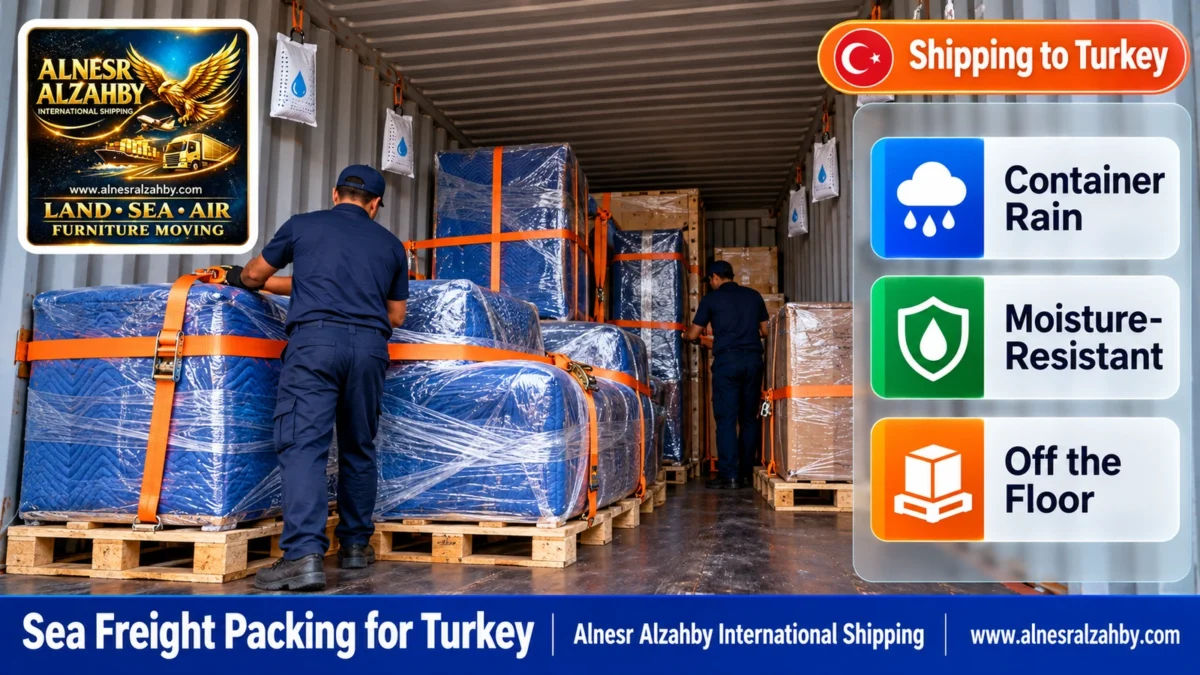
Sea freight packing for furniture and appliances shipped from Saudi Arabia to Turkey: container rain, humidity and salt, the rules of sea packing, packing each type of furniture, and caring for the shipment after arrival.
The sea voyage from Saudi Arabia to Turkey crosses the Red Sea, the Suez Canal and the Mediterranean, in a salty, humid environment where temperatures swing between day and night and between the hot south and the cooler north. Ordinary packing that is fine for a short road trip to the Gulf doesn’t survive this voyage, and saving on this item is one of the things shipment owners regret most. In this guide we explain what happens inside the container, the rules of sea packing, how to pack each type of furniture, and why we don’t recommend shipping with inadequate packing.
Article map11ShowHide
- What happens inside the container?
- The rules of sea packing
- Packing each type
- After arrival in Turkey
- Frequently asked questions
- Why does sea shipping need different packing?
- What is “container rain”?
- Is ordinary cardboard enough?
- Should I wrap wood directly in plastic?
- Does insurance cover damage from weak packing?
- How much does sea packing add?
What happens inside the container?
A container isn’t a still box. It rocks with the ship, its temperature changes between day and night, and moisture condenses on its cold surfaces and then drips onto the load — known in the trade as “container rain”, a common cause of mould on long sea voyages.
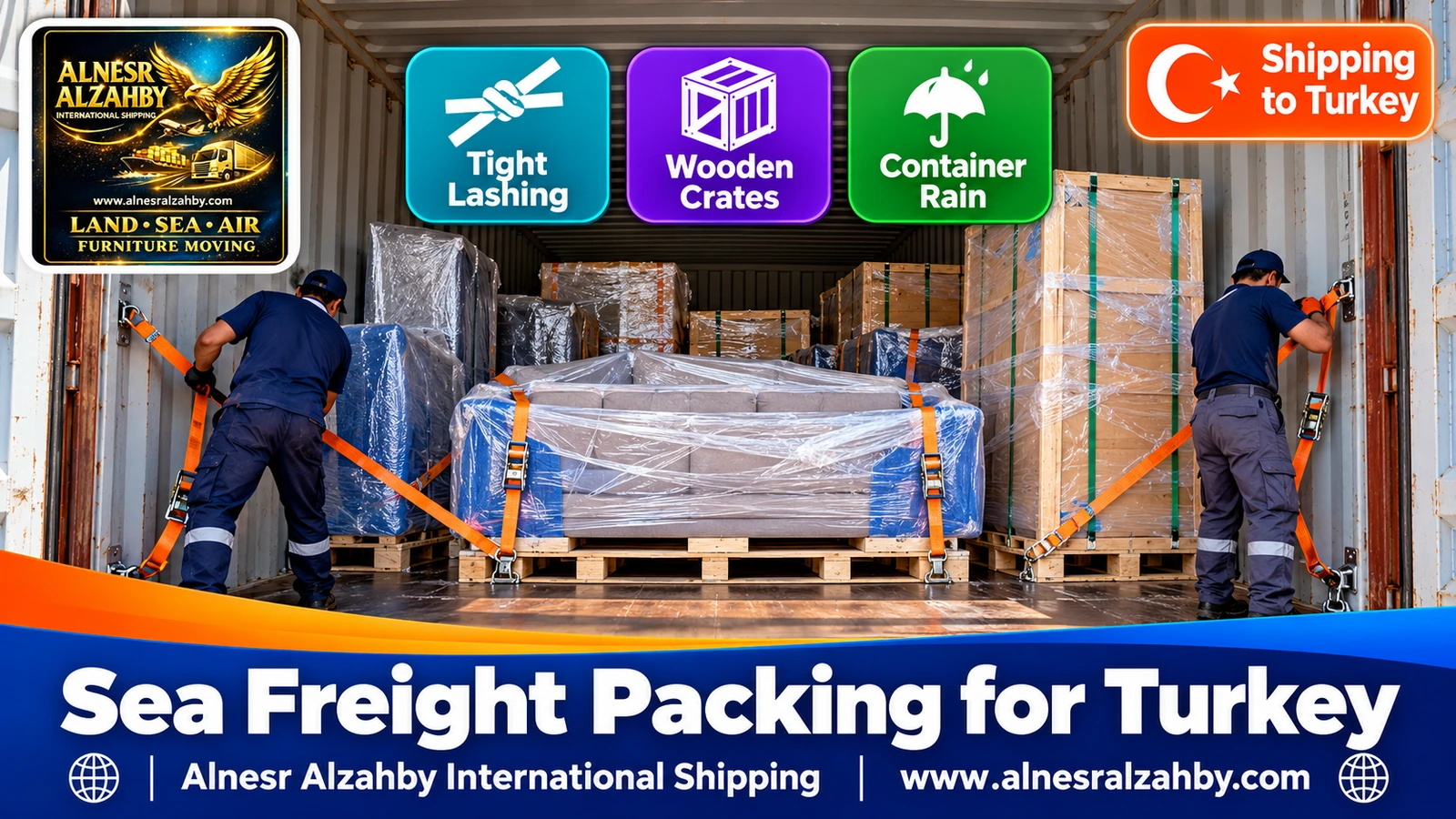
The rules of sea packing
Packing each type
| Item | Sea packing |
|---|---|
| Wooden furniture | A fabric or paper layer, then foam, then moisture-resistant outer wrapping. |
| Sofas and upholstery | Fitted covers, then waterproof wrapping, with moisture absorbers nearby. |
| Mattresses | Sealed mattress bags, raised off the floor. |
| Electrical appliances | Double cardboard, foam and moisture absorbers inside the packaging. |
| Mirrors and glass | Wooden crates or protective boards on both faces, carried upright. |
| Books and papers | Small boxes lined with plastic on the inside. |
After arrival in Turkey
- Open the boxes within days, especially fabrics, books and electronics.
- Air wooden furniture well, and don’t place it directly next to a heater in winter.
- Let appliances reach room temperature before switching them on to avoid internal condensation.
- Check the shipment before signing — see receiving your shipment in Turkey.

To choose the best port for your city read three Turkish ports, and for the destination page shipping to Turkey.
Frequently asked questions
Why does sea shipping need different packing?
Because of humidity, salt, temperature swings and condensation inside the container, and weeks of ship movement.
What is “container rain”?
Water vapour condensing on the cold container roof and dripping onto the load.
Is ordinary cardboard enough?
Not for long sea voyages; it absorbs moisture and weakens, so it needs moisture-resistant layers.
Should I wrap wood directly in plastic?
No; put a fabric or paper layer first so moisture isn’t trapped on the surface.
Does insurance cover damage from weak packing?
It may not, which is why proper sea packing is worth its cost.
How much does sea packing add?
It depends on the type and number of pieces, and is listed as a clear item in the quote.
Turn what you just read into a quote
Send your shipment details and receive a written quote with the price, transit time and the best shipping mode.
More from this section
Related reads on the same type of service.