Shipping to UAE Free Zones: How It Differs from the Local Market and What You Need Before Booking | 0551247117
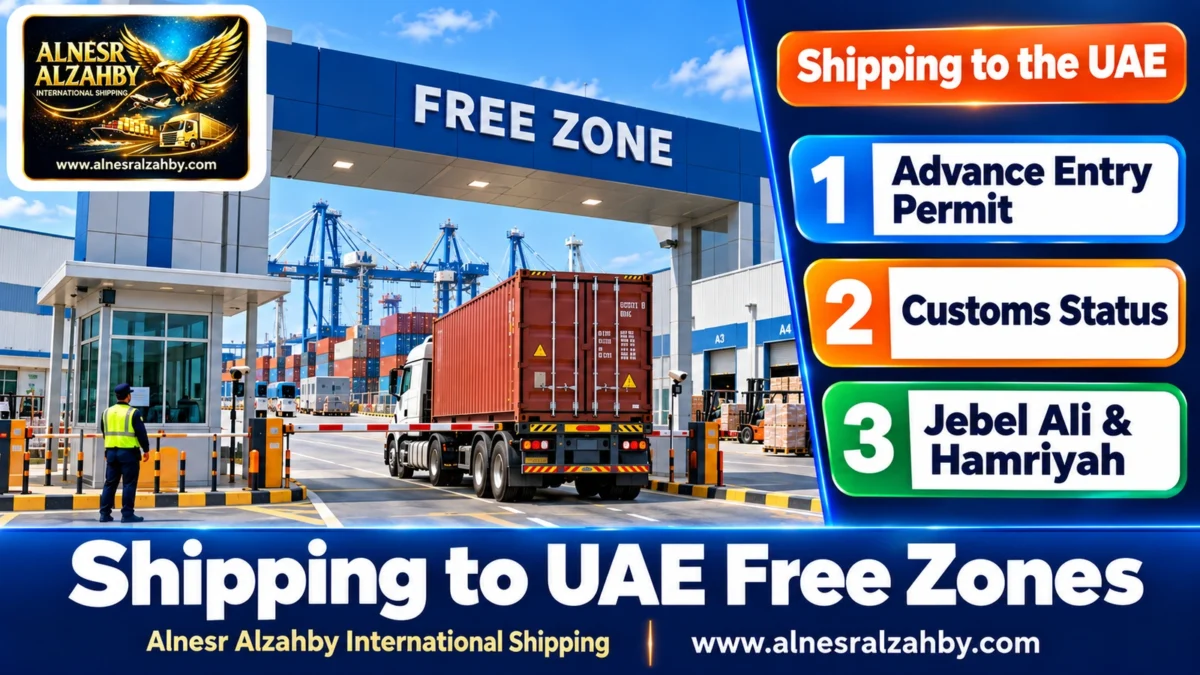
Shipping commercial goods from Saudi Arabia to UAE free zones such as Jebel Ali: how it differs from the local market in permits, customs status and release, the main free zones, and the documents required.
If you are shipping commercial goods from Saudi Arabia to a company in the UAE, the first question before booking is: is delivery inside a free zone such as Jebel Ali, or to a warehouse on the local market? The difference isn’t just the address but the permits, the customs status of the goods, who handles part of the release, and receiving hours. Confusing the two holds many commercial shipments at the gate. In this guide we explain the practical difference, the best-known free zones, what we need from you for delivery, and when a free zone suits you at all.
Article map13ShowHide
- Free zone vs local market
- The best-known UAE free zones
- What we need from you for free-zone delivery
- The shipment’s journey from Saudi Arabia to the free zone
- When should you choose a free zone at all?
- Common mistakes shipping goods to free zones
- Frequently asked questions
- Do you deliver to Jebel Ali Free Zone?
- Who obtains the entry permit?
- Are fees different in free zones?
- What if the consignee isn’t ready?
- Can you deliver to the local market instead of the free zone?
- Do you ship personal belongings to free zones?
Free zone vs local market
| Criterion | Delivery to the local market | Delivery to a free zone |
|---|---|---|
| Entry | Direct to the warehouse or address | An entry permit and advance reference number from the consignee |
| Customs status | Final entry into the local market after procedures | A special status; local-market duties are settled when goods leave into it |
| Release responsibility | Usually the broker and shipper | Partly on the consignee company inside the zone |
| Receiving hours | Relatively flexible | Gates and warehouses with set working hours |
| Re-export | Requires full procedures | Easier — one of the main advantages of free zones |
The best-known UAE free zones
What we need from you for free-zone delivery
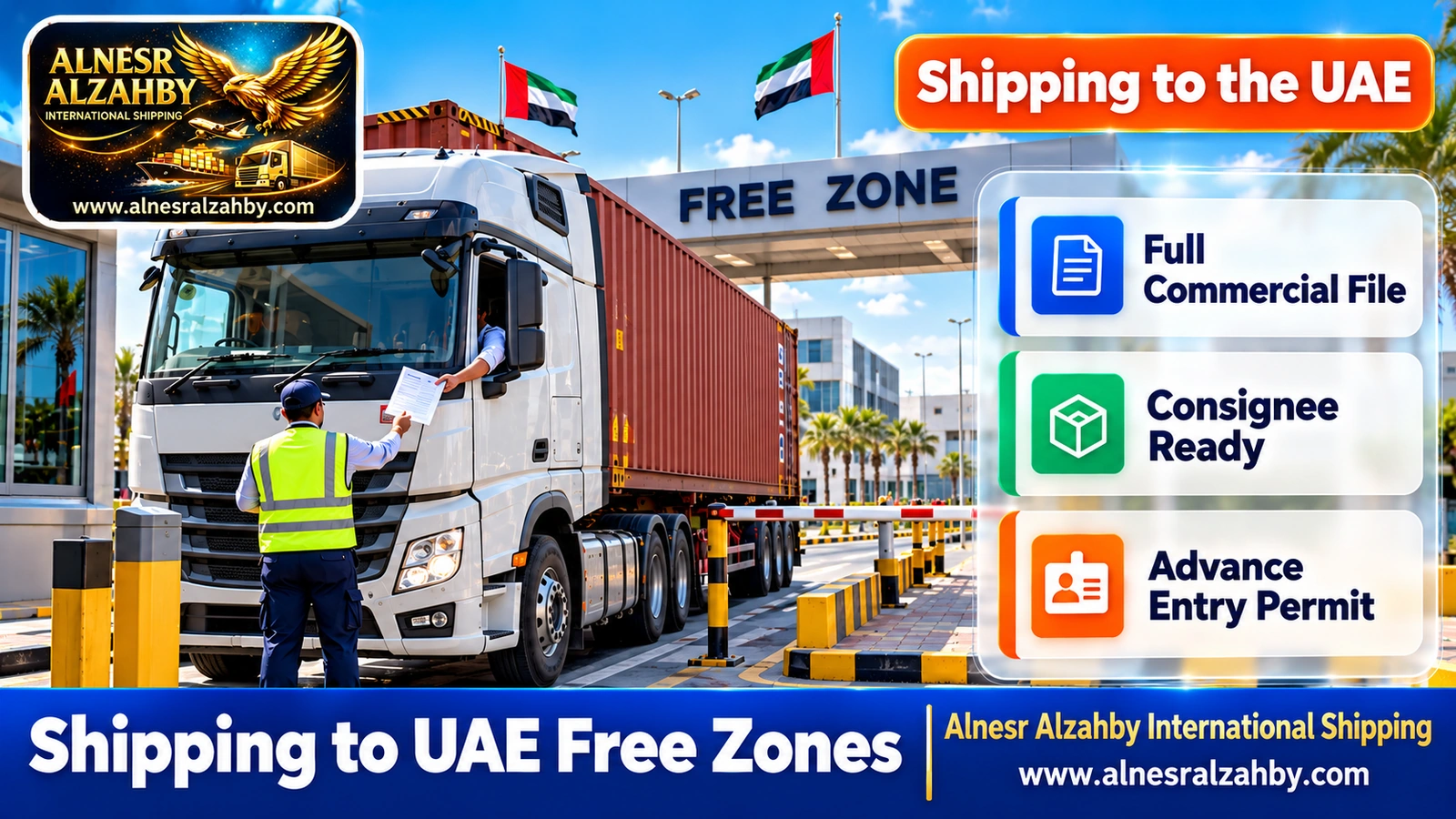
The shipment’s journey from Saudi Arabia to the free zone
| Stage | What happens | Who is responsible |
|---|---|---|
| Before loading | Preparing the invoice, packing list and certificate of origin, and requesting the entry permit | Shipper and consignee together |
| Al Batha crossing | Export procedures from Saudi Arabia | The shipment’s broker |
| Ghuwaifat crossing | Transit or entry procedures depending on the goods’ destination | The broker in coordination with the consignee |
| Free zone gate | Checking the permit and entry | The consignee confirms receipt |
| Inside the zone | Unloading at the warehouse and signing | The consignee |
The common reasons for holds at the border itself are in what stops your shipment at Ghuwaifat.
When should you choose a free zone at all?
This is the importer’s or consignee company’s decision, not the shipper’s, but knowing it helps you plan:
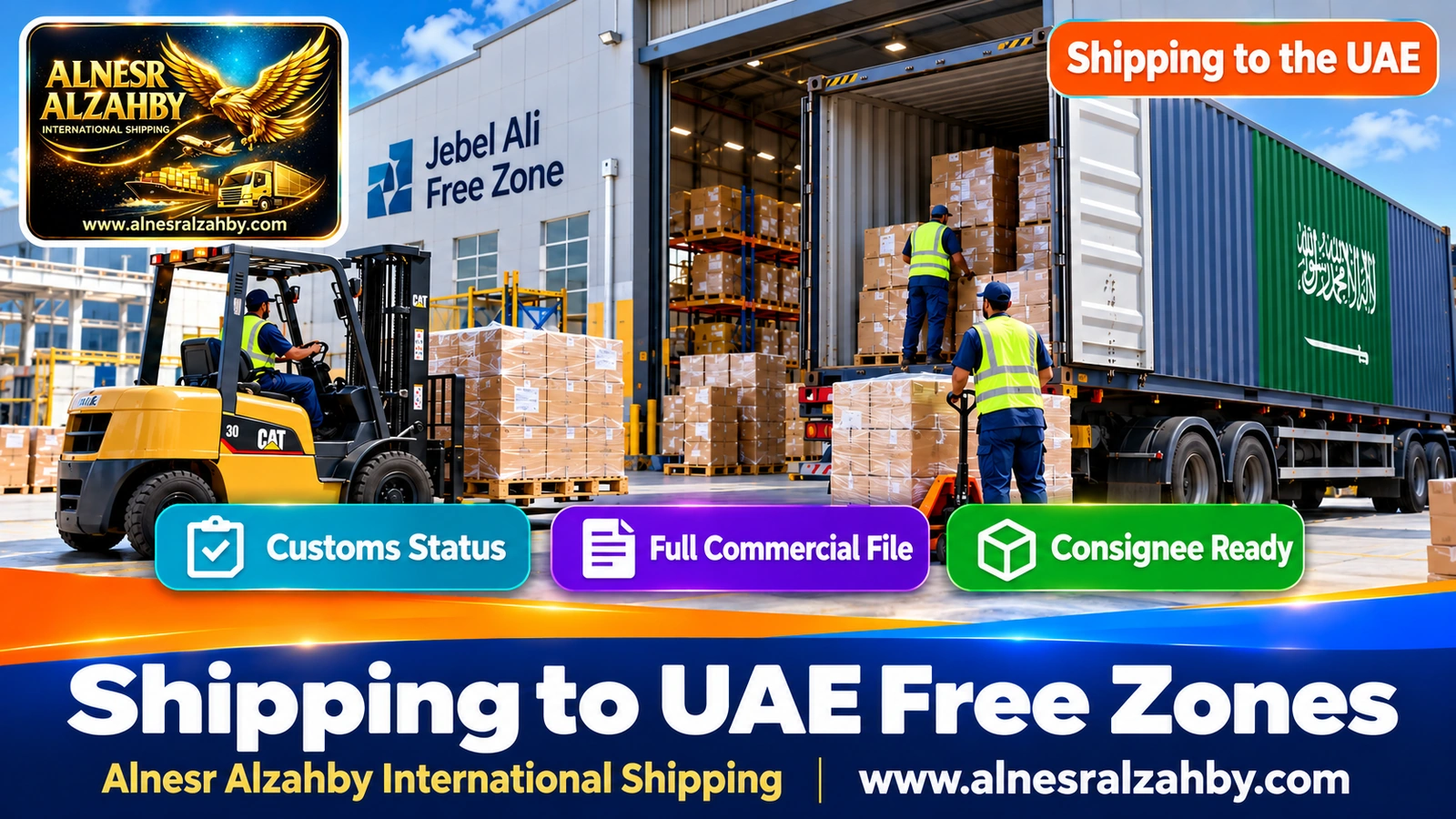
Common mistakes shipping goods to free zones
- Assuming the warehouse address is enough without an entry permit.
- Not confirming that the consignee company is registered in that specific zone.
- A commercial invoice that doesn’t match the packing list in quantities or descriptions.
- Sending the shipment on the receiving warehouse’s day off.
- Confusing clearance fees with the customs duties due when goods leave into the local market.
For commercial service details, see shipping to the UAE.
Frequently asked questions
Do you deliver to Jebel Ali Free Zone?
Yes; we need the consignee company’s reference number and the entry permit before moving.
Who obtains the entry permit?
Usually the consignee company inside the zone; we coordinate with it and follow up until it is issued.
Are fees different in free zones?
The customs status is different, and local-market duties are settled when goods leave into it. We explain the details for your case.
What if the consignee isn’t ready?
The shipment waits and waiting charges may apply. That is why we confirm readiness before loading.
Can you deliver to the local market instead of the free zone?
Yes, if that suits the consignee; it is usually simpler with fewer requirements.
Do you ship personal belongings to free zones?
Free zones are mainly for commercial activity; personal belongings are usually delivered to the home on the local market.
Turn what you just read into a quote
Send your shipment details and receive a written quote with the price, transit time and the best shipping mode.
More from this section
Related reads on the same type of service.